Sleep science & everyday comfort
Why Wool Comforters Can Feel Comfortable Across Changing Temperatures
A comforter’s job seems simple: keep you warm. But warmth is only part of the negotiation between a sleeper, a bed, and a room that may cool, heat up, or grow unexpectedly stuffy before morning. Wool’s ability to take up and release moisture vapor can help make that negotiation feel less clammy. The effect is useful, not magical: comfort still depends on the fill, the cover, the room, and the person beneath it.
Warmth is only one part of the story
People often talk about bedding as if it were a thermostat. Choose the right comforter, the reasoning goes, and the temperature problem is solved. In reality, what we feel in bed is shaped by several things at once: heat from the body, heat lost to the room, moisture released through the skin and breath, the air trapped in the bedding, and the way the comforter rests against us. A comforter can feel warm but still feel damp or oppressive; another may feel pleasantly insulated without creating the same sense of enclosure.
This is where wool has acquired its reputation. Wool fibers can absorb water vapor and later release it into the surrounding air. That behavior may help reduce the sensation of a humid, clammy microclimate beneath the covers. It does not mean wool removes all moisture, cools a person like an appliance, or keeps every sleeper at one ideal temperature all night. Rather, it offers a particular kind of moisture management within the broader task of staying comfortable.
The distinction matters. A fiber that takes up water vapor is not doing precisely the same thing as a fan moving air, a lightweight sheet allowing direct airflow, or a room thermostat lowering the temperature. Nor does moisture absorption guarantee a dry-feeling bed under every condition. If the bedroom is humid, the comforter is too heavy, or several layers hold heat close to the body, the sleeper may still feel too warm.
Think of a wool comforter less as a climate-control device than as one participant in the bed’s small weather system. It can influence how warmth and moisture are experienced, but it cannot dictate the whole forecast.
What happens inside a wool fiber
Wool is a natural fiber with a structure that allows it to interact with moisture vapor. In practical terms, it can take up some water vapor from its surroundings and release it as conditions change. That exchange is often described as helping bedding “breathe,” a phrase that is useful as shorthand so long as it is not mistaken for literal ventilation. The comforter itself does not create fresh air or actively pull moisture out of a room.
Because vapor is different from liquid water, this process should not be confused with a towel soaking up a spill. Wool’s moisture behavior concerns water in gaseous form as well as the way the fibers and the air around them contribute to the feel of the bedding. The sleeper may perceive the result as a more balanced surface: warm, but less sticky than a bed that holds heat and moisture close. How noticeable that difference is varies from person to person.
Heat and moisture are linked, but they are not interchangeable. The body gives off heat and moisture during sleep. Bedding slows the loss of body heat by holding relatively still air around the sleeper. The right amount of insulation is a matter of preference and circumstance; too little can leave someone cold, while too much can encourage overheating. Moisture management may affect whether that insulation feels comfortable, particularly for someone who dislikes a damp or close sensation.
It is tempting to turn this into a promise that wool is always cool in summer and warm in winter. That slogan skips over the details. Wool fill can contribute to comfort across a range of conditions, but the actual result depends on the amount of fill, the construction, the cover fabric, the sleeper’s warmth, and the temperature and humidity of the room. “Temperature regulating” is best understood as a description of material behavior, not a guarantee of a fixed body temperature.
Fill weight: the detail that changes the feel
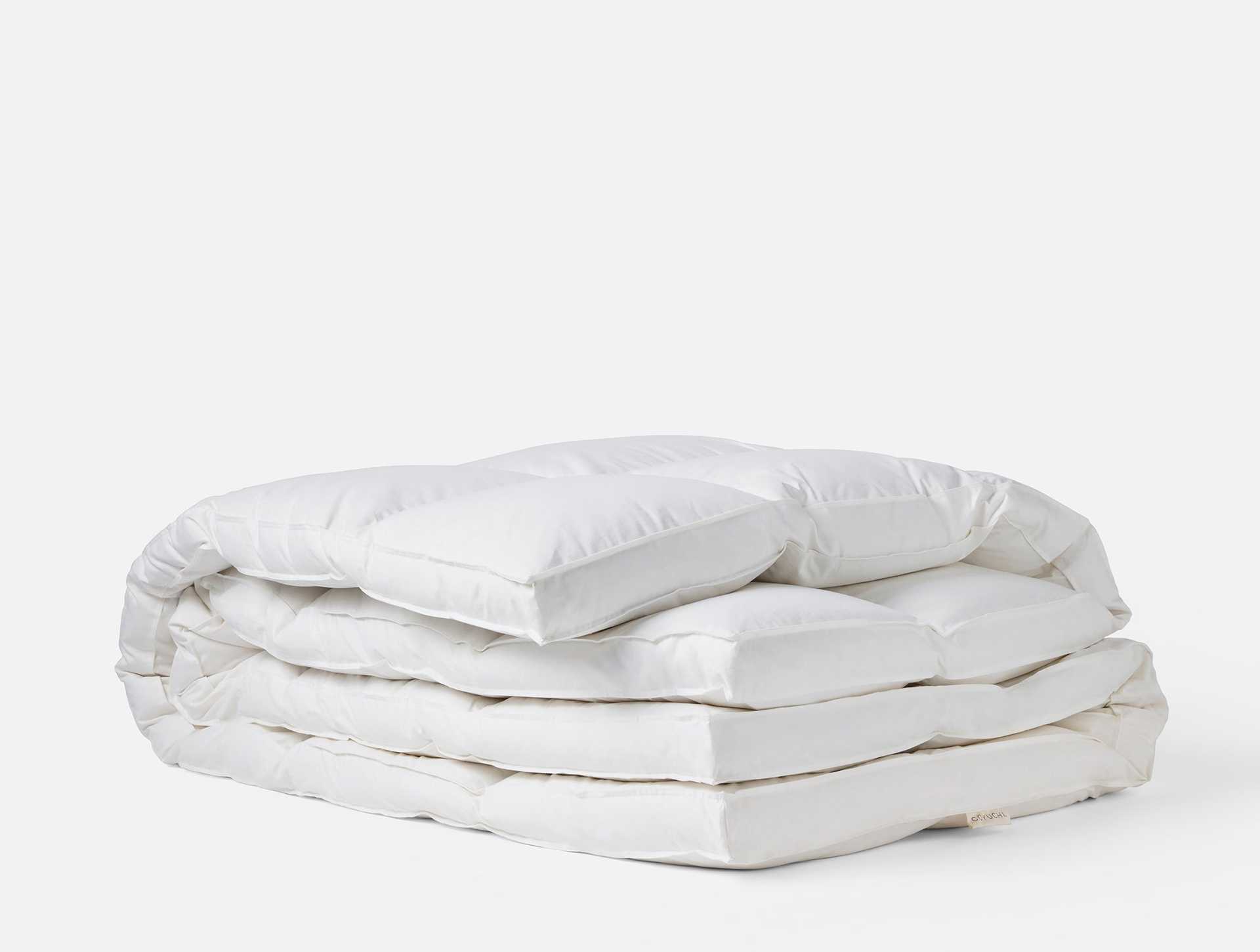
Two wool comforters can use the same broad filling material and feel quite different. One of the reasons is fill weight: the quantity of wool used in a given area. A lighter comforter generally provides less insulation and is often easier to layer. A standard or heavier version may create a warmer, fuller bed. The word “light” is not a universal measure, however, and specifications should be read alongside the manufacturer’s description of intended use and care.
A lightweight wool comforter may suit a warm bedroom, a sleeper who tends to overheat, or someone who likes to add or remove layers as the seasons change. It can also work for people who prefer a less substantial covering. Standard-weight fill may be a better starting point for a cooler room or a person who wants more enveloping warmth. Those are useful comparisons, not rigid rules. A cold sleeper in a heated apartment may prefer a lighter layer; a warm sleeper in a chilly bedroom may still want more coverage.
Fill weight is also only one part of construction. Quilting or other internal arrangements can influence how evenly the filling stays distributed. A well-considered construction may help prevent the comforter from feeling noticeably sparse in one area and packed in another, although normal use and care still matter. Size, drape, and how much of the bed is covered can affect the sense of warmth, too. A comforter that fits the bed and sleeper comfortably may feel different from one that is pulled tight or leaves the sides exposed.
When comparing options, look for the actual fill specification where available rather than relying solely on a label such as “all-season.” That phrase can be appealing, but it cannot account for every bedroom, climate, or personal preference. If the specification is unclear, the care and product information may explain whether a comforter is intended to be lighter, warmer, or suitable for a particular season.
The cover is part of the climate
Fill draws much of the attention, but a comforter’s outer fabric is in close contact with the rest of the bedding and contributes to the overall feel. A cover that feels crisp, smooth, or substantial can change how the comforter lies on the body. It may also affect airflow and the ease with which moisture moves through the layers. The wool inside cannot be evaluated as if it were floating by itself; it is enclosed in a fabric shell and used with sheets, blankets, and, often, a duvet cover.
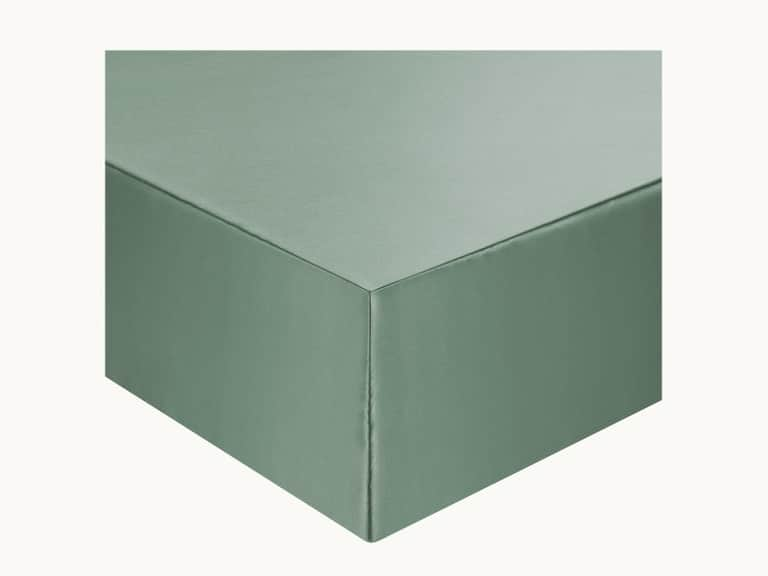
That last layer can make a difference. A duvet cover protects the comforter and can be removed for laundering, but its fabric and weave contribute to the bed’s surface. A breathable cotton cover may feel different from a denser fabric or a cover selected primarily for a silky hand. The choice is personal. Someone who likes a cool, crisp surface may favor one feel; someone who prefers a smooth, warmer touch may favor another. Neither preference cancels out the wool’s properties, but each changes the total experience.
Sheets are another part of the system. A lightweight, airy sheet beneath a wool comforter may feel different from a heavier sheet set, even if the comforter itself remains unchanged. When a bed feels too warm, people sometimes focus exclusively on replacing the comforter, though the cause may be several layers working together—or the room itself. Adjusting one layer at a time can make it easier to identify what is contributing to the discomfort.
There is no need to make bedding more complicated than it is. A useful approach is to think in layers: the fabric next to the skin, the insulation above it, and the surrounding room. If each layer is chosen with the others in mind, it becomes easier to adjust comfort without expecting one material to do everything.
Bedroom conditions matter more than a label suggests
A comforter behaves in a room, not in a product description. Bedroom temperature, humidity, ventilation, heating, and seasonal changes can all affect whether wool feels pleasantly warm or too much. A well-heated room in winter may call for less insulation than a drafty room at the same time of year. In a humid environment, bedding can feel different than it does in a dry one. Even the location of the bed—near a window, radiator, or exterior wall—can alter the conditions around the sleeper.
Personal physiology is part of the picture as well. Some people naturally feel warm at night; others prefer a deeper layer of insulation. Nightwear, activity, medications, hormonal changes, and health circumstances can also influence how someone experiences warmth. The same comforter may feel just right to one person and overly warm to another. Sharing a bed can make the question more complicated: partners may have different preferences, and a single covering does not automatically suit both.
These differences are a reason to be cautious about claims that a particular fill is best for everyone. Wool may be worth considering if moisture-related discomfort is part of the problem, or if a sleeper wants natural fill with a choice of weights. But persistent night sweats or a sudden change in how warm someone feels may have causes unrelated to bedding. A comforter can shape comfort; it cannot diagnose a health concern.
If a bedroom is regularly uncomfortable, begin with the environment. Consider whether the room feels too warm, whether air can circulate, and whether several heavy layers are being used together. A small adjustment to the room or to one bedding layer may be more informative than changing everything at once. This is not an elaborate experiment—just a way of noticing which conditions correspond with a better night.
A practical comparison of lightweight and standard wool comforters
Choosing between a lightweight and a standard wool comforter is less a test of technical knowledge than an exercise in matching insulation to your habits. Start with how the current bed feels. Do you regularly push the covers away, wake feeling too warm, or prefer only a small amount of weight? Or do you tend to seek extra layers and feel cold in the early hours? A rough account of your experience is more useful than assuming that the season alone tells you what to buy.
- A lighter fill may appeal if you sleep warm, keep the room well heated, or like the flexibility of layering.
- A standard-weight fill may suit a cooler bedroom or someone who wants a more substantial sense of coverage.
- The cover fabric can change the comforter’s surface feel and how it works with sheets or a duvet cover.
- Construction and dimensions affect the way the filling is distributed and how the comforter fits the bed.
- Care instructions help determine whether the comforter suits your household’s cleaning habits and available space.
It can help to think about the whole year rather than choosing by a single night. Some households change layers with the weather; others keep a steady bedroom temperature. If you already use a separate blanket, a lightweight comforter may offer a different balance than it would in a bed with no other covering. If the room changes dramatically between seasons, a comforter that works well with removable layers may offer more flexibility than a single, very warm option.
For couples, separate blankets are sometimes a more practical answer than searching for one perfect compromise. That is not a failure of the comforter. It is an acknowledgment that the bed is shared by two individual bodies. A wool comforter can help shape the bedding environment, but it cannot make two different temperature preferences identical.
Care is part of long-term comfort
Wool bedding requires attention to its care label. Some comforters may call for occasional airing or spot cleaning, while others may have more specific cleaning instructions. Washing methods that are suitable for ordinary sheets are not automatically suitable for wool fill. Heat, vigorous agitation, or the wrong cleaning product may damage fibers or the comforter’s construction, so the manufacturer’s directions should take precedence over general advice.
A duvet cover can help protect a comforter from everyday soil and reduce how often the filled item itself needs attention. It is not a substitute for following care instructions, but it can make routine upkeep more manageable. If the comforter has a stain, check the label before applying a cleaner or attempting a full wash. A large item that cannot be cleaned safely at home may require professional care, depending on the manufacturer’s guidance.
Care matters to comfort because a comforter is not a one-night purchase in practical terms. How easy it is to maintain, air, or store may influence whether it remains pleasant to use. A product whose cleaning requirements do not fit a household’s routine can become less convenient over time, however appealing its materials may be. Reading the care information before choosing helps make the purchase decision more grounded.
Storage between seasons deserves similar thought. A comforter should be kept according to the maker’s recommendations, clean and fully dry before it is put away. Compressed storage may save space, but it is wise to check whether the manufacturer advises against prolonged compression. The aim is simple: protect the fill and construction so that the comforter remains in the condition intended for use.
What wool can—and cannot—promise
Wool’s appeal rests on a set of material characteristics, not on a guarantee of uninterrupted sleep. Its fibers can absorb moisture vapor and release it, and the fill can provide insulation. Together, those properties may contribute to a comfortable bed across changing conditions. They do not establish that every wool comforter will feel cool, that it will prevent night sweats, or that it will outperform every other material for every sleeper.
That distinction is useful in an industry fond of turning material features into universal outcomes. A specification tells you something about the object; it does not fully predict your experience of it. The practical questions are more modest: How warm do you tend to sleep? What is your room like? Do you prefer lightweight coverage or a fuller layer? What cover and sheets will be used with it? Can you follow the care instructions? Taken together, the answers give a better basis for choosing than any single claim about temperature regulation.
If a wool comforter feels comfortable across a cool evening and a warmer stretch of weather, that comfort comes from the interaction of fiber, fill amount, fabric, bed layers, room conditions, and the sleeper. It is a small domestic achievement, not a miracle. The best bedding often works quietly: it keeps the night from becoming a distraction, and asks for little attention once the lights go out.
The takeaway
Wool comforters can feel comfortable across changing temperatures partly because wool interacts with moisture vapor as well as providing insulation. That may help a bed feel less clammy, but it does not make the comforter a thermostat. Fill weight helps determine how warm and substantial it feels; the cover and the rest of the bedding shape the surface; and the bedroom and sleeper determine what counts as comfortable in the first place.
When comparing lightweight and standard options, look beyond the name. Check fill details, construction, cover fabric, dimensions, and care requirements. Then consider how you actually sleep and what your room is like. The aim is not to find a universal ideal, but to choose a bedding arrangement that suits your own night—one with enough warmth, enough room for comfort, and no unnecessary clamminess competing for attention.
This article offers general educational information about bedding materials and sleep comfort. It is not medical advice. Persistent or concerning changes in sleep or night sweating are best discussed with a qualified healthcare professional.